Introduction
Arabic is a language filled with beautiful expressions that communicate love, respect, and deep emotions. One such expression is Ya Hayati, a popular Arabic phrase used between romantic partners, family members, and close friends. If you have heard someone say “Ya Hayati” in a conversation, song, or romantic message, you may wonder what it means and why it carries so much emotion.
The Ya Hayati meaning is “O my life” or “my life” in English. It is an affectionate expression that people use to show how important someone is to them. In this guide, you will learn its Arabic spelling, literal meaning, pronunciation, cultural background, common uses, and practical examples. You will also discover how this phrase differs from other popular Arabic terms of endearment.
What Is Ya Hayati Meaning in Arabic?
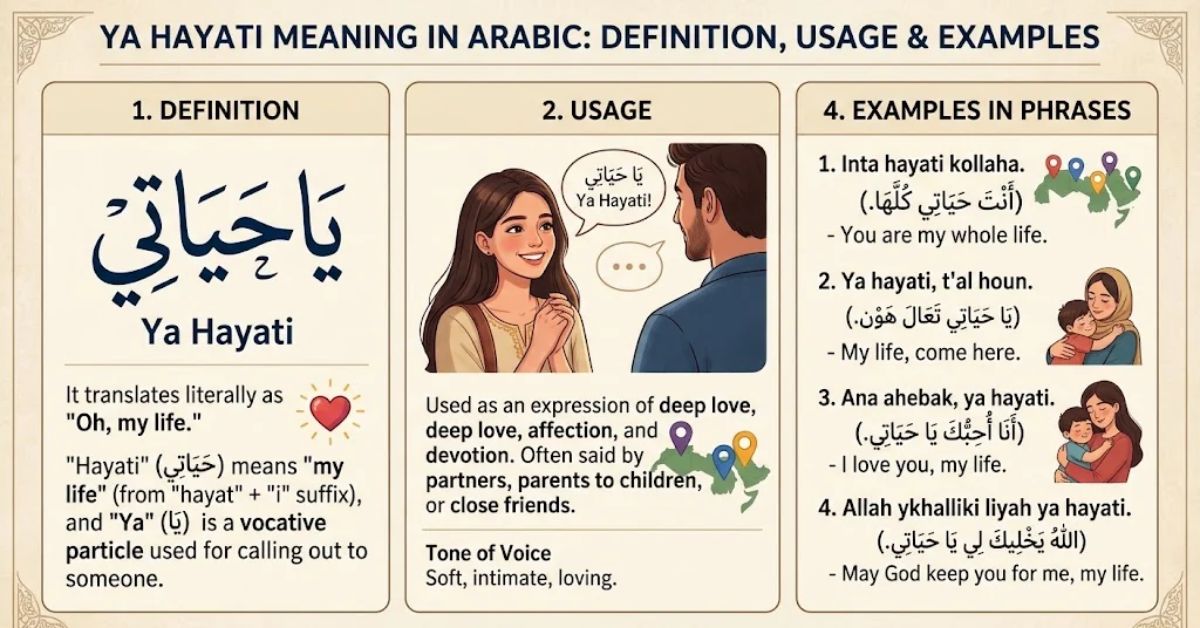
Ya Hayati (يا حياتي) is an Arabic expression that translates to “O my life” or “my life” in English. It combines two Arabic words: “Ya” (يا), meaning “O” or a form of direct address, and “Hayati” (حياتي), meaning “my life.” Together, these words create a warm expression used to address someone who holds a special place in the speaker’s heart.
The phrase communicates more than ordinary affection. It suggests that another person is deeply valuable and brings happiness, comfort, or meaning to someone’s life. Depending on the relationship, it can express romantic love, family affection, friendship, or emotional closeness. For example, a husband may call his wife Ya Hayati, while a mother might use it when speaking lovingly to her child.
In everyday Arabic conversations, Ya Hayati is a natural term of endearment. It is especially common in informal speech, affectionate messages, and personal conversations. Although the expression is widely understood across many Arabic-speaking communities, pronunciation and conversational habits may vary by region. Its central meaning, however, remains connected to love, appreciation, and emotional attachment.
Literal Meaning and Arabic Translation of Ya Hayati
To understand Ya Hayati fully, it helps to examine its individual words. The first word, “Ya” (يا), is a particle used in Arabic to call or address someone directly. It is similar to saying “O” in English, although English speakers do not commonly use that word in everyday romantic conversation. The second word, “Hayati” (حياتي), comes from “Hayah” (حياة), which means “life.”
The suffix “-i” in Hayati indicates possession and means “my.” Therefore, Hayati translates directly as “my life.” When the two words are combined, Ya Hayati becomes “O my life.” In natural English conversation, however, people usually translate it as “my life,” “my love,” or “darling” to preserve its affectionate tone.
The expression has an emotional meaning beyond its dictionary translation. Calling someone Ya Hayati suggests that the person is precious and important. It is not simply a statement about existence or survival. Instead, it communicates a strong personal connection. This is why the phrase appears in romantic conversations, family interactions, Arabic songs, and affectionate greetings.
How to Pronounce Ya Hayati Correctly
The phrase Ya Hayati is generally pronounced as Yaa Ha-yaa-tee. English speakers can divide it into three simple sound parts: “Yaa,” “Ha,” and “yaa-tee.” The first word has a long “aa” sound, while the second word begins with a gentle Arabic “h” sound. The final syllable, “tee,” is pronounced clearly.
In Arabic script, the expression is written as يا حياتي. The pronunciation may sound slightly different depending on the speaker’s accent. For example, speakers from Egypt, the Levant, the Gulf, and North Africa may have different regional speech patterns. However, the basic pronunciation remains recognizable throughout much of the Arabic-speaking world.
For English speakers, the easiest way to practice is to say the phrase slowly before using it in a natural conversation. Avoid placing too much emphasis on individual syllables. Instead, pronounce it smoothly as one affectionate expression. Understanding both the pronunciation and meaning will help you use Ya Hayati more confidently.
When Do People Use Ya Hayati?
Ya Hayati is commonly used when someone wants to express affection toward a person they care about. Romantic partners may use it in text messages, phone calls, and face-to-face conversations. For example, someone might say “Good morning, Ya Hayati” to make a greeting feel more personal and loving. It can also appear in messages expressing gratitude, missing someone, or offering emotional support.
However, the phrase is not limited to romantic relationships. Parents may call their children Ya Hayati as a way of showing tenderness. Close relatives and friends may also use it when they share a warm and trusting relationship. Its meaning depends on the situation, the speaker’s personality, and the connection between the people involved.
The expression is generally informal and affectionate. It is not usually appropriate for formal business meetings, professional emails, or conversations with strangers. Additionally, people should consider cultural and personal boundaries before using terms of endearment. Although Ya Hayati is a familiar expression, not everyone feels comfortable receiving affectionate language from someone they barely know.
Ya Hayati Meaning in Romantic Relationships
In romantic relationships, Ya Hayati is a powerful way to communicate love and emotional attachment. When someone calls their partner Ya Hayati, they are expressing that the person is an important part of their world. It can be used between married couples, dating partners, and people who share a deep romantic connection.
The phrase often appears in loving messages and everyday conversations. A person might say, “I miss you, Ya Hayati,” or “You are always in my heart, Ya Hayati.” These sentences communicate affection without requiring complicated words. The expression can make an ordinary message feel warmer and more meaningful.
Unlike some romantic expressions that focus mainly on physical attraction, Ya Hayati emphasizes emotional importance. It suggests that the relationship brings happiness, comfort, and companionship. Nevertheless, the strength of the expression depends on how it is used. In some relationships, it may be a deeply romantic phrase, while in others, it may simply be a familiar nickname.
Ya Hayati vs. Other Arabic Terms of Endearment
Arabic has many affectionate expressions, and each one carries a slightly different meaning. Comparing Ya Hayati with other popular terms can help English speakers understand how Arabic-speaking people express love and appreciation.
- Ya Habibi (يا حبيبي): Means “my beloved” or “my dear.” It is commonly used for a male.
- Ya Habibti (يا حبيبتي): Means “my beloved” or “my dear” when addressing a female.
- Ya Omri (يا عمري): Means “O my lifetime” or “my life.” It is another affectionate expression.
- Ya Albi (يا قلبي): Means “O my heart” and communicates deep emotional affection.
- Ya Rouhi (يا روحي): Means “O my soul” and is often used as a loving nickname.
- Ya Hayati (يا حياتي): Means “O my life” and expresses that someone is precious to the speaker.
These expressions are not always interchangeable. For example, Habibi and Habibti directly refer to a beloved person, while Hayati uses the idea of life to express emotional value. The best choice depends on the relationship, personal preference, and regional speaking style.
Is Ya Hayati Used for Both Men and Women?
Yes. Ya Hayati can be used when addressing both men and women. The word Hayati means “my life,” and the expression does not change according to the gender of the person receiving it. This makes it a flexible term of affection in Arabic conversations.
For example, a woman can call her husband Ya Hayati, and a man can use the same expression when speaking to his wife. Parents can also use it with sons and daughters. Similarly, close friends may use the phrase regardless of gender when their relationship allows affectionate language.
It is important to distinguish Ya Hayati from gender-specific forms such as Habibi and Habibti. Those two expressions change according to the gender of the person being addressed in standard usage. Ya Hayati, however, remains the same. This grammatical feature makes it relatively easy for Arabic learners to remember and use correctly.
Examples of Ya Hayati in Everyday Conversations
Understanding examples is one of the easiest ways to learn how an Arabic expression works in real communication. Ya Hayati can appear in greetings, romantic messages, family conversations, and emotional exchanges.
Here are some practical examples:
1. Romantic greeting
Person A: Good morning, my love.
Person B: Good morning, Ya Hayati.
Meaning: A warm greeting between romantic partners.
2. Expressing affection
Arabic: أنت حياتي، يا حياتي.
English: You are my life, my love.
Meaning: A person is expressing deep affection toward someone special.
3. Missing someone
Arabic: اشتقت إليك يا حياتي.
English: I miss you, my life.
Meaning: A loving message expressing emotional longing.
4. Family conversation
Mother: Come here, Ya Hayati.
Meaning: A mother affectionately calls her child.
5. Expressing gratitude
Arabic: شكراً يا حياتي.
English: Thank you, my dear.
Meaning: A warm and affectionate way to thank someone.
These examples demonstrate that Ya Hayati can fit different situations. The surrounding words and the relationship between speakers help determine whether the expression sounds romantic, friendly, or parental.
Cultural Importance of Ya Hayati in Arabic-Speaking Communities
Terms of endearment play an important role in many Arabic-speaking cultures. Expressions such as Ya Hayati, Habibi, and Ya Rouhi are commonly heard in personal conversations because they help communicate warmth and closeness. They can make ordinary interactions feel more personal and emotionally meaningful.
In some Arabic-speaking households, affectionate expressions are part of everyday family communication. Parents may use them when speaking to children, while married couples may include them in regular conversations. Friends and relatives can also use these phrases to show appreciation and emotional support. However, the frequency and style of usage vary across countries, families, and individual preferences.
Ya Hayati also appears in Arabic music, television, films, and social media. These cultural settings have helped introduce the expression to people who do not speak Arabic. For English speakers, learning its meaning offers a small but useful insight into Arabic language and communication. It also shows how a short phrase can carry a deeper emotional message.
FAQs About Ya Hayati Meaning
1. What does Ya Hayati mean in English?
Ya Hayati means “my life” or “O my life” in English. It is an affectionate Arabic expression used to show love, care, and emotional attachment.
2. Is Ya Hayati a romantic phrase?
Yes, it is often used romantically between couples. However, parents, relatives, and close friends may also use it to express affection.
3. How do you write Ya Hayati in Arabic?
Ya Hayati is written as يا حياتي in Arabic. It combines Ya (يا), meaning “O,” and Hayati (حياتي), meaning “my life.”
4. Can I call a man Ya Hayati?
Yes. Ya Hayati can be used for both men and women. The expression remains the same regardless of the gender of the person being addressed.
5. What is the difference between Ya Hayati and Ya Habibi?
Ya Hayati means “my life,” while Ya Habibi means “my beloved” or “my dear” when addressing a male. Both expressions communicate affection, but their literal meanings are different.
Conclusion
The Ya Hayati meaning goes beyond a simple English translation. Written as يا حياتي, this beautiful Arabic expression means “my life” or “O my life” and is used to communicate love, care, and emotional closeness. It is popular among romantic partners but can also be used between parents and children, relatives, and close friends. Understanding its pronunciation, grammar, and cultural context makes it easier to use naturally. Whether you hear it in an Arabic song, receive it in a message, or use it in conversation, Ya Hayati is a meaningful expression that reflects the warmth and emotional richness of the Arabic language.
