Introduction
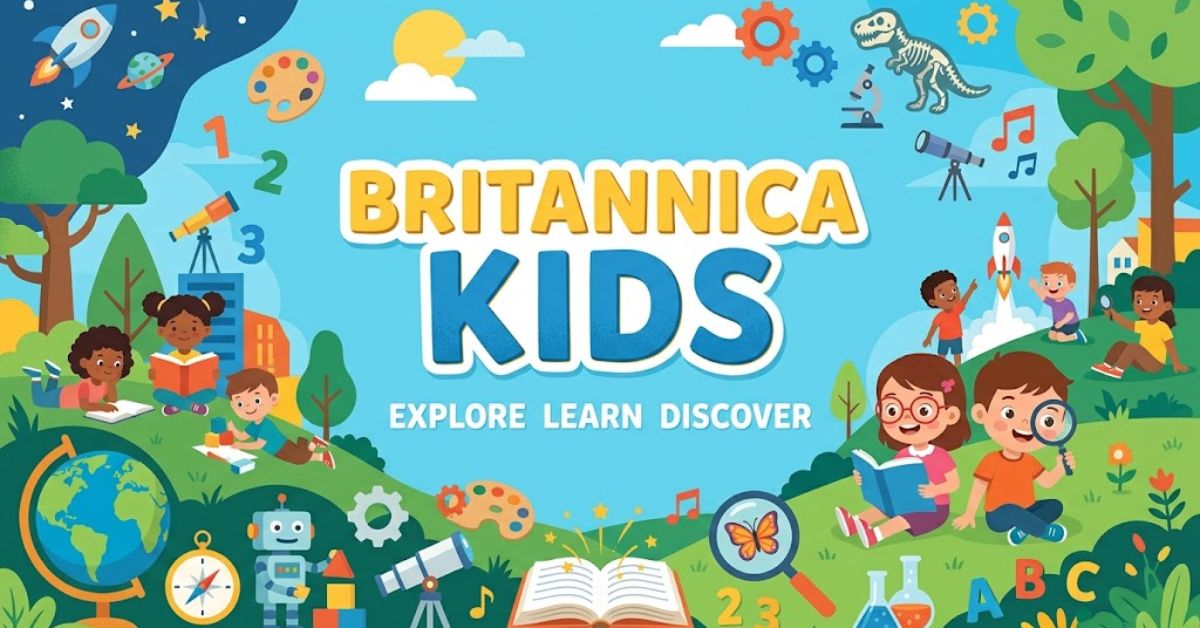
Children ask questions constantly: Why do stars shine? How do volcanoes erupt? Who built ancient cities? Finding clear, trustworthy answers is an important part of learning, especially when children are doing homework or exploring a new interest. Britannica Kids is designed to make that search easier by presenting encyclopedia-style information in a format created for younger learners. It brings together educational articles, biographies, images, videos, geography resources, and other reference materials in one child-friendly environment. Public library descriptions commonly identify Britannica Kids as an age-appropriate online encyclopedia for school-age learners, with resources supporting homework and independent research.
This Britannica Kids guide explains what Britannica Kids is, how it works, what children can learn from it, and how parents, teachers, and students can use it effectively.
What Is Britannica Kids?
Britannica Kids is a digital learning and reference resource from Encyclopaedia Britannica created to help children explore information at an appropriate reading level. Rather than presenting every topic exactly as it would appear in an adult encyclopedia, the platform is designed around younger readers and their learning needs. Depending on the available edition or access plan, children can explore articles, biographies, images, videos, geography resources, and animal-related information.
The goal is not simply to provide short answers. A good children’s encyclopedia should help a student understand a subject well enough to continue researching it. Britannica’s broader educational products emphasize factual, age-appropriate information, subject-matter expertise, and fact-checking. Its school resources also provide content at different reading levels, helping students approach the same broad topics in ways that match their abilities.
For U.S. families, this makes Britannica Kids particularly useful for homework, school projects, general knowledge, and curiosity-driven learning. Instead of relying on random search results, children can begin research with a structured reference source.
Why Is Britannica Kids Useful for Students?
One major advantage of Britannica Kids is its organization. Young learners may know what they want to learn but not know which sources deserve their trust. A child researching planets, presidents, dinosaurs, ecosystems, or famous inventors can begin with an encyclopedia article and then use related material to build a broader understanding. This approach encourages research skills rather than simply copying the first answer found online.
Britannica Kids also combines different types of educational media. Its resources have included articles, biographies, images and videos, as well as sections such as Animal Kingdom and World Atlas. Visual resources can be especially helpful when children are learning geography, science, history, or unfamiliar concepts because pictures and maps can make abstract information easier to understand.
Additionally, using a structured reference source can help children develop digital literacy. They learn to search for a topic, read informational text, identify important details, compare related subjects, and decide which information is relevant to a school assignment.
What Can Kids Learn With Britannica Kids?
The range of subjects is one of the strongest reasons families use a children’s encyclopedia. Students can explore science, history, geography, animals, people, culture, technology, and many other areas of general knowledge. Britannica’s children’s and student-oriented resources have historically covered thousands of topics, with reference materials supported by photographs, illustrations, maps, charts, and other educational media.
Science topics can help children investigate subjects such as space, Earth, animals, the human body, and physical processes. History resources can introduce important people, civilizations, events, and periods. Geography tools can help students understand countries, regions, landmarks, and the physical features of our planet.
The platform can also support interest-led learning. A student who starts with dinosaurs might move into paleontology, fossils, geology, evolution, or prehistoric environments. That natural movement from one question to another is valuable because curiosity often becomes stronger when children can easily discover connected topics.
How Britannica Kids Supports Homework and Research
Britannica Kids can serve as a starting point when a student receives a research assignment. For example, a child writing about an American historical figure can first read a biography to understand the person’s life and achievements. The student can then identify important dates, events, places, and related historical subjects before moving to additional classroom-approved sources.
This process is useful because effective research is more than collecting sentences from the internet. Students need to understand the information before using it. A children’s encyclopedia can provide background knowledge in accessible language, making it easier for younger readers to recognize key ideas and unfamiliar vocabulary.
Parents and teachers can also use Britannica Kids to teach source evaluation. Children should still learn that no single reference source needs to answer every question. For an important school project, they may need to consult books, classroom materials, primary sources, government resources, museums, libraries, or other credible references. Britannica Kids works best as part of that broader research process.
Britannica Kids vs. General Internet Search
A general internet search can return millions of results, but more results do not always mean better information. Children may encounter advertising, social media posts, opinion-based content, outdated pages, or information written for adults. Younger students may also struggle to determine whether a website is credible.
Britannica Kids offers a more focused environment. Library systems describe the resource as a safe, age-appropriate reference option for children and students, with content intended for homework help and learning. This structure can reduce the amount of irrelevant material a child has to sort through.
However, Britannica Kids should not replace good research habits. Students should still check dates, understand the assignment requirements, use teacher-approved sources, and avoid copying information without understanding it. The strongest approach is to use Britannica Kids to build background knowledge and then expand research when the assignment requires it.
Is Britannica Kids Good for Different Age Groups?
The appropriate resource depends on the child’s reading ability, grade level, and purpose. Britannica has developed multiple children’s and student-focused products over time, including resources intended for elementary and middle-school learners. Some library implementations also organize Britannica resources into different levels for younger children, students, and adults.
This matters because a third grader and a high-school student may research the same subject but need very different explanations. Younger learners usually benefit from simpler vocabulary, visual material, and shorter explanations. Older students may need more detailed context, advanced terminology, and deeper supporting information.
Parents should therefore consider the child’s reading level rather than choosing a resource based only on age. Teachers can also help students decide whether a children’s encyclopedia, student encyclopedia, library database, textbook, or primary source is the best match for a particular assignment.
Britannica Kids for Parents and Teachers
For parents, Britannica Kids can provide a practical way to encourage independent learning. Instead of immediately answering every question a child asks, a parent can encourage the child to research the topic and explain what they discovered. This turns screen time into an active learning activity.
Teachers can use encyclopedia resources in lessons involving research, reading comprehension, science, social studies, geography, and information literacy. Britannica’s broader education platform emphasizes expert-reviewed information, multiple reading levels, and accessibility features designed for students.
The best results come when adults teach children how to use the resource, not simply where to find it. Students should learn how to form a research question, search effectively, identify important facts, take notes in their own words, and acknowledge sources when required. These skills remain useful long after a particular assignment is finished.
Quick Answer: Is Britannica Kids Worth Using?
Yes. Britannica Kids is a useful educational reference resource for young learners who need accessible information for homework, research, or general curiosity. It combines encyclopedia content with educational media such as images, videos, biographies, and geography resources.
Its greatest value is that it gives children a structured place to begin learning. It should not be treated as the only source for every assignment, but it can provide a strong foundation before students move to more specialized books, databases, primary sources, or teacher-recommended materials.
Frequently Asked Questions
What is Britannica Kids used for?
Britannica Kids is used for children’s research, homework, general knowledge, and independent learning. Students can explore topics through articles, biographies, images, videos, geography resources, and other educational materials.
Is Britannica Kids safe for children?
Britannica Kids is designed as an age-appropriate educational reference resource. Public library descriptions specifically present it as a child-focused environment for learning and homework research.
Is Britannica Kids free?
Access can depend on the specific Britannica product, subscription, school, or public library providing it. Some U.S. libraries offer Britannica resources as part of their digital collections, so families should check their local library’s available databases.
What age is Britannica Kids for?
Britannica offers different children’s and student-oriented resources rather than one universal reading level. The best choice depends on a learner’s age, grade, reading ability, and research needs.
Can students use Britannica Kids for school projects?
Yes. Britannica Kids can be a strong starting point for school research because it provides organized background information on many subjects. Students should follow their teacher’s source and citation requirements and use additional sources when required.
Conclusion
Britannica Kids gives young learners a structured way to explore the world, answer questions, and develop stronger research habits. Its combination of encyclopedia articles, biographies, visual resources, videos, geography materials, and child-focused content makes it useful for both curiosity and schoolwork.
For parents and teachers, its greatest benefit is not simply the amount of information available. It is the opportunity to teach children how to find, understand, evaluate, and use information responsibly. Britannica Kids should be one part of a broader research toolkit, alongside libraries, books, classroom resources, and credible specialized sources. Used thoughtfully, it can turn a child’s everyday question into a meaningful learning experience and help build knowledge that extends far beyond a single homework assignment.